When choosing a dentist, for most of us, the main factor is ensuring we receive high-quality care (that’s clean, long-lasting and affordable, not to mention nearby).
Both NHS and private dentists offer routine check-ups and follow-up treatments like fillings, but there are several key distinctions between the two. Especially in 2025.
So, what do you need to know when considering the type of dental care you choose? We’ve summarised 7 key differences to weigh before deciding to go private.
The cost of treatment
Unlike other NHS services, dentistry is not free for everyone.
Instead, it’s subsidised, meaning patients typically pay for services such as check-ups, fillings, and emergency care.
Band 1 costs £27.40, Band 2 costs £75.30, and Band 3 costs £326.70.
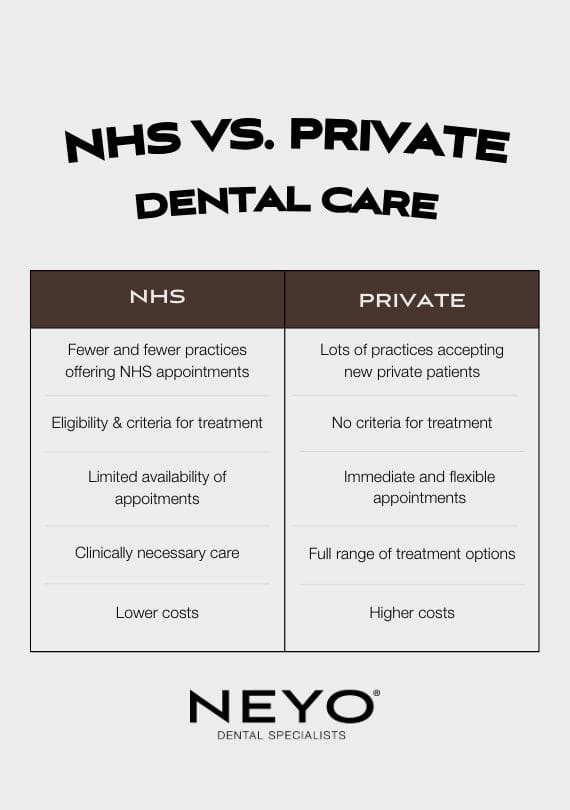
Private dental care may have higher costs compared to NHS services, but this is dependent on the type of treatment needed and the location of the practice.
But realistically, you can expect to pay more, but at the same time, spend more time with your dentist, ensure long-lasting restorations and have a wider range of non-invasive procedures to choose from.
You can find out more about NEYO’s prices and payment options on our fees page.
Eligibility for treatment
NHS dental services are accessible to all UK residents for treatments essential to oral health.
Certain groups are eligible for free NHS dental care, including individuals under 18, those under 19 in full-time education, and those meeting specific NHS exemption criteria, such as pregnant women and new mothers who have given birth within the last year.
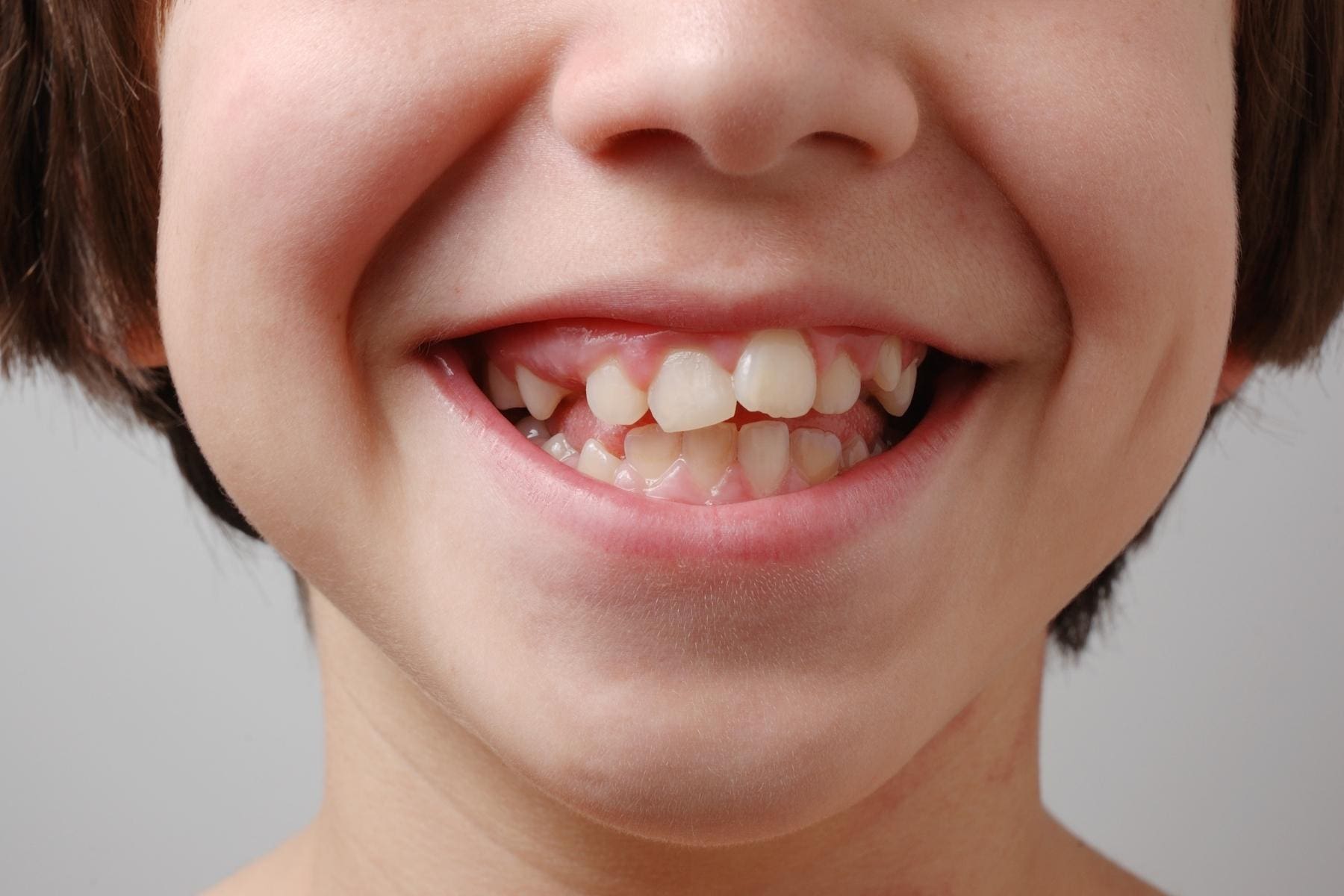
Orthodontic treatment is available on the NHS to some under-18s who fulfil certain criteria measured using the Index of Orthodontic Treatment Need (IOTN).
Wait times for NHS orthodontics can be 1-2 years, as the NHS caps the number of patients each practice can treat annually.
Similarly, cosmetic and some restorative options are also not available on the NHS, like composite bonding or dental implants. See private fees for dental implant cost UK.
Private dental care is available to anyone without the need for contracts, memberships, or insurance.
Simply enquire with NEYO or your local dentist about becoming a patient.

Length of appointments
Typically, NHS dental check-ups last around 10-15 minutes on average; however, this duration may be extended if treatment is necessary.
Due to targets, these timings can be tight, meaning you may end up feeling rushed in your appointment.
Other services, such as hygiene appointments and treatments, vary in length.
Private dental check-ups generally allow for more time, often spanning 20 to 30 minutes, and are more tailored to individual needs.
Services available
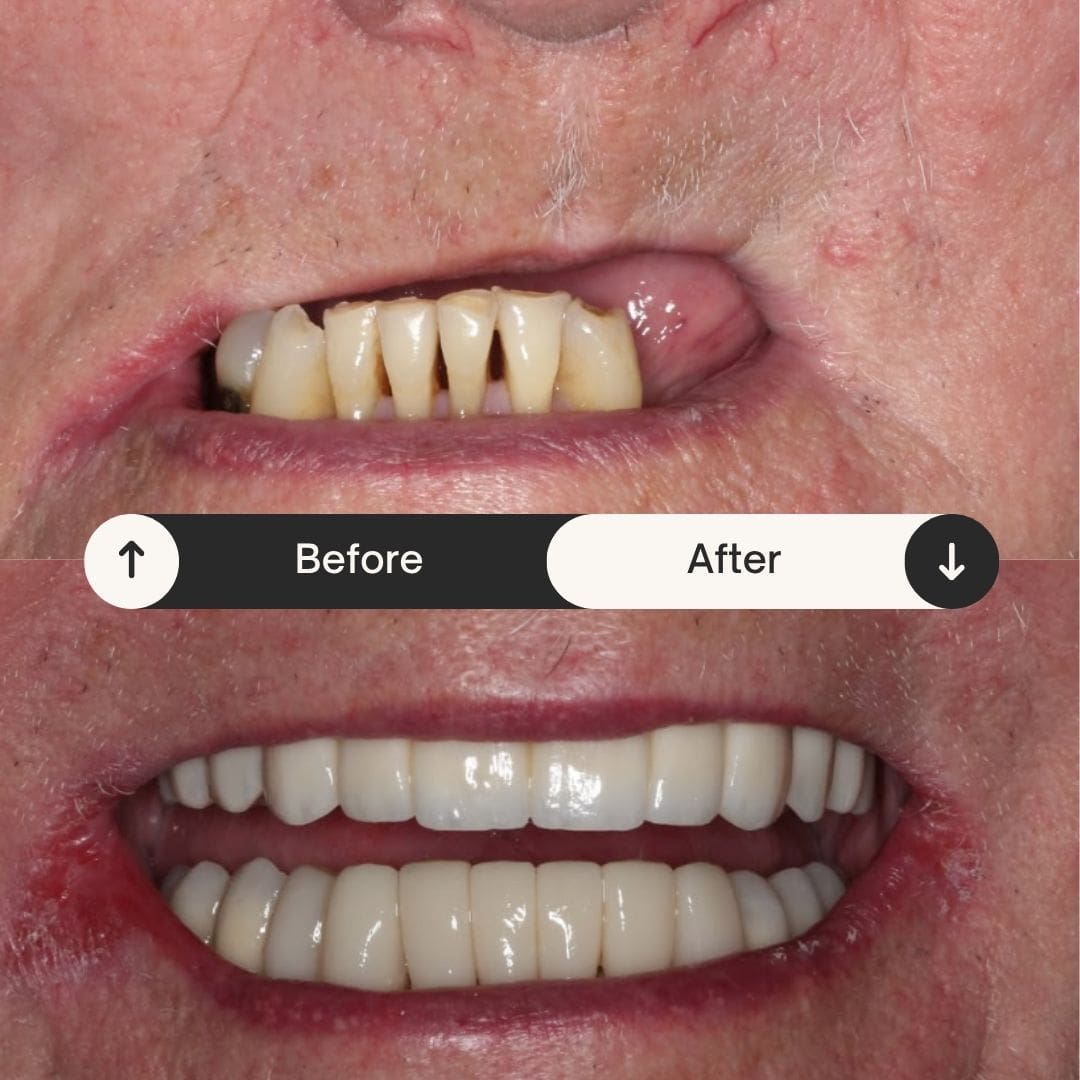
Typically, private dentists can offer a wider range of treatment options, have more flexibility in providing treatments not covered by NHS funding, and can offer a broader array of choices to patients.
NHS dentists prioritise care based on clinical necessity, focusing on maintaining the health of your teeth, mouth, and gums. Unlike private dental care, the NHS does not cover cosmetic treatments.
NHS dental services cover routine check-ups and provide treatments for abscesses, wisdom tooth extractions, fillings, root canal therapy, and prosthetic services, such as dentures, crowns, and bridges.
Orthodontic treatments, such as braces, may be available under the NHS if specific criteria are met, typically requiring medical justification.
Private dental care mirrors the services offered by NHS dentists but does not have the prioritisation and criteria for treatment that you may find with an NHS dentist.
Cosmetic and aesthetic procedures, aimed at enhancing the appearance of your teeth, are also available at private practices.
These treatments encompass teeth whitening, composite bonding, porcelain veneers, and various orthodontic options, including invisible braces.

Availability of appointments
Securing a spot with an NHS dentist can be challenging.
The availability of NHS appointments is limited, and with the overwhelming demand for NHS dentists, getting an appointment when you actually need one can be extremely difficult.
Long waiting lists for treatments and delays in dental appointments have unfortunately become commonplace in NHS dentistry.
In contrast, private dental practices typically offer immediate or next-day appointments, along with a broader selection of appointment times, including evenings and weekends.
Very rarely are there waiting lists for private dental appointments, meaning you can be seen at a time that suits you and as soon as you need treatment.

Quality of treatment
Both NHS and private dentists are extensively trained and experienced professionals.
Regardless of your choice between NHS and private dental care, you can expect high-quality treatment.
Nevertheless, private dentists often have the flexibility to allocate more time for your appointments, allowing for a more comprehensive check-up.
This extra time enables your dentist to thoroughly explain treatment options and address any questions or concerns you may have.

Consistency of care
Consistency in seeing the same dentist is preferred for both NHS and private patients.
However, with NHS treatment, continuity of care isn’t always assured due to appointment availability issues.
Private dentists typically offer easier appointment scheduling, allowing patients to choose their preferred dentist.
This can help build a stronger patient-dentist relationship and ensure continuity of care over time, especially for nervous patients.
Get to know the team at NEYO and the staff that will help make your appointments as enjoyable as possible on our team page.