Receding gums describes the process of your gum line slowly shrinking away from your teeth, making them appear longer and, as a result, exposing your tooth roots.
More often than not, this is a significant sign of gum disease. While gingival recession can be the result of various factors (some in your control – and others out of your hands), it’s a problem you’ll need to act fast on.
Acting early enough means our periodontist can provide essential gum recession treatment to prevent the problem from worsening, ensuring you can keep your teeth and maintain a stable smile.
Get help from leading periodontists in Sussex. Together, we can implement a treatment plan that prevents further recession.

What makes gum recession worse and leading causes
The following factors contribute to and cause receding gums:
Poor oral health
Poor oral health and hygiene contribute to gum disease, which eats away at your gums. Having too much plaque build-up on teeth and gums that is not regularly removed or cleaned often means that gum disease progresses past the reversible stage (gingivitis) and into more serious stages like periodontal disease, which causes bad breath, bleeding, gum recession and more.
Aggressive brushing
Overbrushing or overflossing can cause damage to teeth and gums. Your brushing technique, in particular, if too rough, can cause gums to recede. Patients should focus on gentle movements when brushing their teeth with soft-bristle brushes to avoid causing soreness or bleeding.
Hormonal changes and fluctuations
Periods of hormonal changes, like pregnancy or menopause, can trigger gum recession.
Improper tooth positions
Misalignment or crooked teeth put pressure on certain areas of the gums, which can cause them to recede.
Genetics
Your genetic makeup can also be an influence. More than 30 per cent of all people are predisposed.
Smoking
Smoking and using tobacco products can directly affect your gums, causing them to recede and make gum disease worse.
Receding gum pictures


Receding gums stages
[ninja_tables id=”6216″]
Dive deeper into the symptoms, details and what can be done at each receding gum stage.
Can gum recession be reversed?
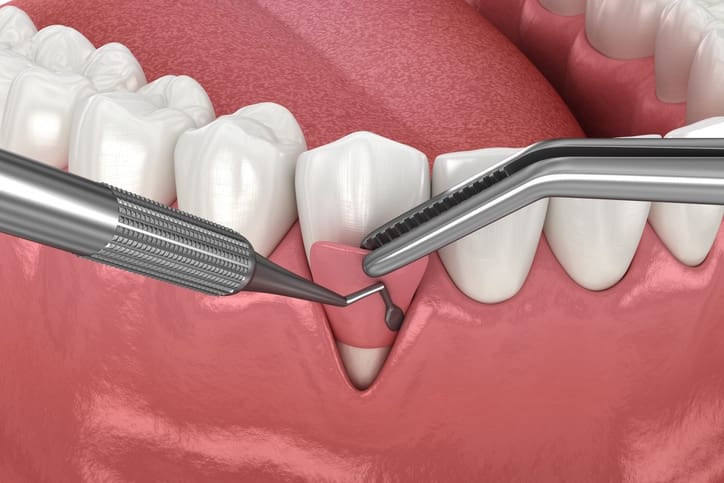
Simply, once gums have receded, they will not grow back naturally. At the same time, if your gum disease has progressed past gingivitis, it cannot be reversed either. At stages like this, though, not all hope is lost. We can help manage the condition, stop it from progressing and rebuild the gum tissue you’ve lost with soft tissue grafts, regenerative materials and other surgical procedures to restore the gum line.
Explore treatments: Deep Cleaning | Gum Grafting | Gum Lifts | Regeneration | Surgery
Want to know how to stop receding gums from getting worse? You seek help – and you seek specialist help. Most general, private dentists won’t have the skills or treatments available to help manage your gum disease and save your receding gums. The likelihood of losing your teeth will be higher, and you’ll likely be recommended treatments like extraction and then tooth replacement.
However, it never really addresses the problem of gum disease; the most you can expect is a cleaning to treat the issue. As a specialist clinic in Sussex, Principal Dentist and periodontist Dr Yogesh Wadher has the experience, skills, and technology to help reverse the damage and rebuild your gums, protecting your oral foundations and helping you retain your natural smile for longer. Book a consultation.
Read next: I healed my receding gums.