As specialist orthodontists who deal with a wide range of teeth straightening cases and patients of all ages daily, we know that choosing the right orthodontic treatment isn’t just about straightening and realigning your smile and bite, but also about finding the right solution that fits your lifestyle. And the right solution that makes you feel confident and produces the results you expect.
If you’re considering straightening your teeth for the first time or again, you may be wondering whether to choose Invisalign or traditional braces. While both can deliver excellent results, they’re vastly different in how they make people feel, each with its own pros, cons, and suitability.
So, who better than specialists like Dr Neil Woodhouse to break down everything you need to know to make the right decision for you – whether you’re a parent, teen or an adult finally ready to take the leap and invest in your smile.

Quick comparison: Invisalign vs braces at a glance
[ninja_tables id=”6038″]
Ideal candidates for each system - which is best for you?
[ninja_tables id=”6039″]

Appearance, comfort & lifestyle
A 2022 YouGov survey found that 41% of UK adults would delay orthodontic treatment if it involved visible braces, so in terms of appearance, if you want to avoid the look of metal braces, then Invisalign might be a better option. One of the system’s most significant advantages is that it’s invisible, discreet, and removable.
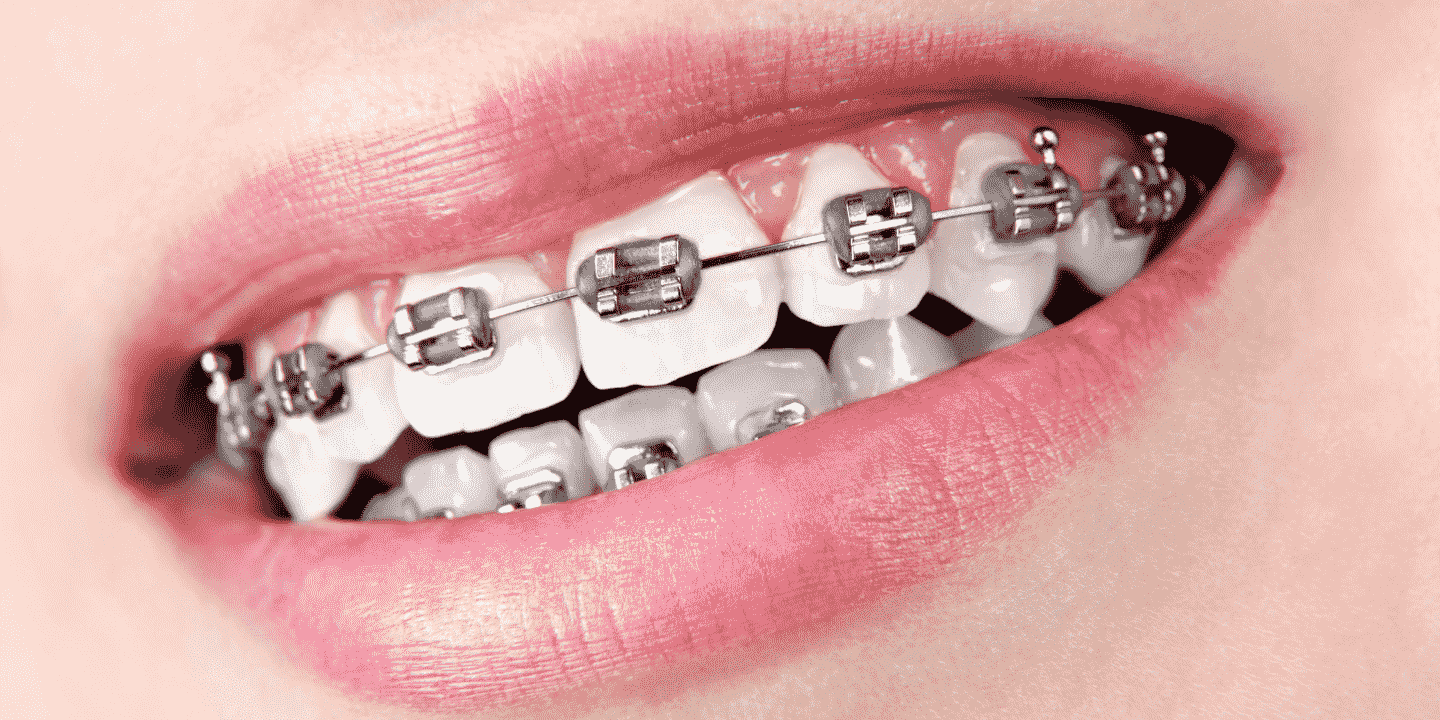
That said, fixed braces do have discreet options, such as Lingual Braces, which sit behind the teeth, and Clear Braces, which are made of ceramic and tooth-coloured material.
Choosing on comfort
Both systems gradually move teeth so that some slight discomfort can be expected at each aligner or tightening stage. In terms of daily wear, Invisalign is designed with comfort in mind and uses patented materials to improve this experience, making them slightly more favourable as they are smoother and less likely to irritate gums and lips. Metal braces, by nature, can cause slight irritation as they come into contact with the cheeks and lips.
Flexibility and lifestyle
Invisalign is known to be more flexible and fits better into your lifestyle, whether you’re an adult or a teen – it’s what they’re designed for. As they’re removable for up to two hours a day, patients remove them before meals, when brushing, and also to play sports or listen to music.
Braces, on the other hand, are fixed in place; they’re there 100% of the time, but they necessarily won’t get in the way of your lifestyle either. They just offer less flexibility – and you’ll face restrictions on certain chewy and crunchy foods.

Effectiveness & treatment times
Invisalign takes as little as 3 months, but more severe cases can take up to 12 months. With fixed braces, there’s no shortcuts. Treatment duration is typically between 12 and 24 months, but can be extended in some complex cases.
In terms of efficiency and effectiveness, both options are great, but they shine in different ways. For the more complex bite problems, fixed braces will be the most effective, hands down.
Invisalign, while powerful, is over 90% effective for mild to moderate malocclusions; however, success rates decrease with more complicated cases. Journal of Orthodontics (2021).
[ninja_tables id=”6040″]

Costs & financing (UK)
Private orthodontic treatment varies in complexity and cost by clinic. Here’s our prices for specialist treatment in Burgess Hill:
[ninja_tables id=”6041″]
Explore the costs in detail

What Neyo Dental Specialist recommends
As specialist orthodontists, we use both Invisalign and fixed braces as trusted treatments for our patients. The best option for your smile will entirely depend on your specific case, but here’s our brief advice:
- Choose Invisalign for a subtle and flexible treatment option if your case is not complex and you’re disciplined enough to wear your aligners consistently. If you couldn’t stick to retainers, Invisalign likely won’t work for you.
- Choose braces when you need a more comprehensive solution for severe bite problems and misalignment, or when you require a low-maintenance option, even if it is more visible. Because with Invisalign, you will be required to brush your teeth after every meal to keep your aligners clean and free from staining.
Still unsure? Book an orthodontic consultation at our dental practice in Burgess Hill:
[wpforms id=”5182″]